
“Jump in and make something happen”
Climate-related work our members do outside of CCL
Life can be complicated. We juggle lots of moving parts. Among them are the projects and jobs we do in response to the climate crisis. Whether it’s volunteer or paid work, we want it to be personally meaningful and sustainable within the context of our lives.
To help make that notion more concrete, we asked several of our members two questions:
- What climate-related work do you do outside of CCL activities?
- What is one thing that you learned in the course of that work?
Here’s what four members told us. (We have edited their responses slightly for clarity and brevity.)
Laurie Kirkpatrick
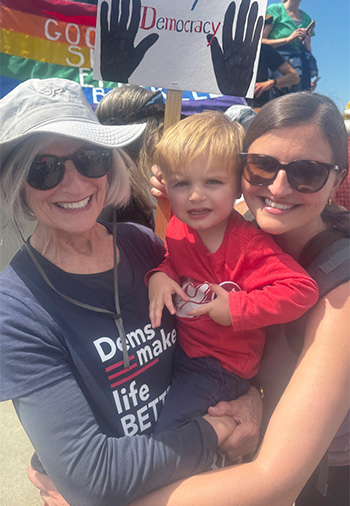
Although I don’t currently attend CCL meetings, my time there was a productive step in a journey toward greater climate and political activism.
Today I speak up frequently and donate generously to climate-focused organizations, as well as to other causes I hold dear. I call my political representatives several times a week to weigh in on issues that pertain to climate, civil rights, voting rights, health, science and education. I also march in demonstrations, attend Town Hall meetings, phonebank and write postcards.
What have I learned? That each of us must find personally sustainable ways to stay engaged. Small actions taken collectively contribute to righteousness in these very dark times. I’d like to feel I was on the right team, no matter what the outcome.

As Project Lead for the Induction Cooktop Teaching Project, I visit Oakland Unified School District 3rd through 12th grade classrooms to introduce induction and other electric cooking appliances for the benefit of indoor air quality and the respiratory health of students’ families. Whenever possible, we link the swap-out of appliances to the climate crisis. Methane pollution is the main connecting link.
We have learned from our students how many families also use their kitchen gas oven as a space heater. We are excited that a friend and collaborator of ours is developing a companion project to introduce space heat pumps to school families.
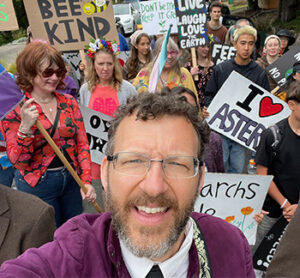
I volunteer as an Ambassador with The Switch Is On, a non-profit that supports home electrification by providing tools and resources to Californians. I joined in 2021 after my wife and I went all-electric in our home. Getting gas out of our house was an enormously positive change for us, and as a relatively early adopter I seized the opportunity to help others wanting to make the change.
I have tabled at events, advised my electrification-curious friends and neighbors, and posed with my appliances for a Switch Is On photo shoot. I even wrote a song about heat pumps that The Switch Is On helped turn into a music video.
Working with The Switch Is On has shown me that positive and creative messaging can really break through and help shape the narrative around an issue like electrification. It also makes the work a lot of fun!
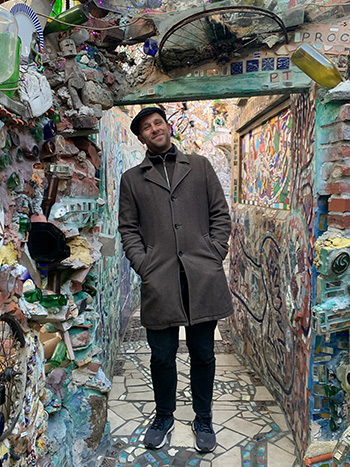
At SPUR (San Francisco Bay Area Planning and Urban Research Association), we work to decarbonize the Bay Area’s existing buildings by generating research and policy recommendations for various actors. We then go out and advocate for the changes that we’d like to see. All of this is very values-informed. We focus on equitable, prosperous, sustainable, and resilient regions.
One thing I’ve learned is that there’s a wide gap between the right decision politically, and the right decision from a pure policy perspective. Coalitions, entrenched interests, and moments of opportunity all influence the “scope of possibility” for policy change. What is actually possible often differs from the ideal and most cost-effective policy. But even so, we consistently push for and socialize the better option. It just makes sense to jump in and make something happen.
An extra tidbit:
CCL-Alameda in some ways was a training ground for getting a job in climate policy. I joined the electrification group and it was a crash course in building electrification. It really gave me a head start. When other folks who are trying to get into climate policy reach out to me, I tell them, if they have the capacity, to volunteer with organizations like CCL.
In coming months, we will gather and publish more stories about our members’ climate-related work outside of CCL.
-Nick Despota